Thyroid and your periods
Overview
Your thyroid gland controls your body's energy use, and it affects periods and fertility. Thyroid problems are common in women and are easy to test for.
Key points
- An underactive or overactive thyroid can change your periods and make pregnancy harder.
- A simple blood test (TSH, with free T4) checks thyroid function.
- Thyroid conditions are treatable. Never stop thyroid medicine on your own.
- If you take thyroid medicine and become pregnant, tell your doctor straight away. The dose often needs to go up.
What the thyroid does
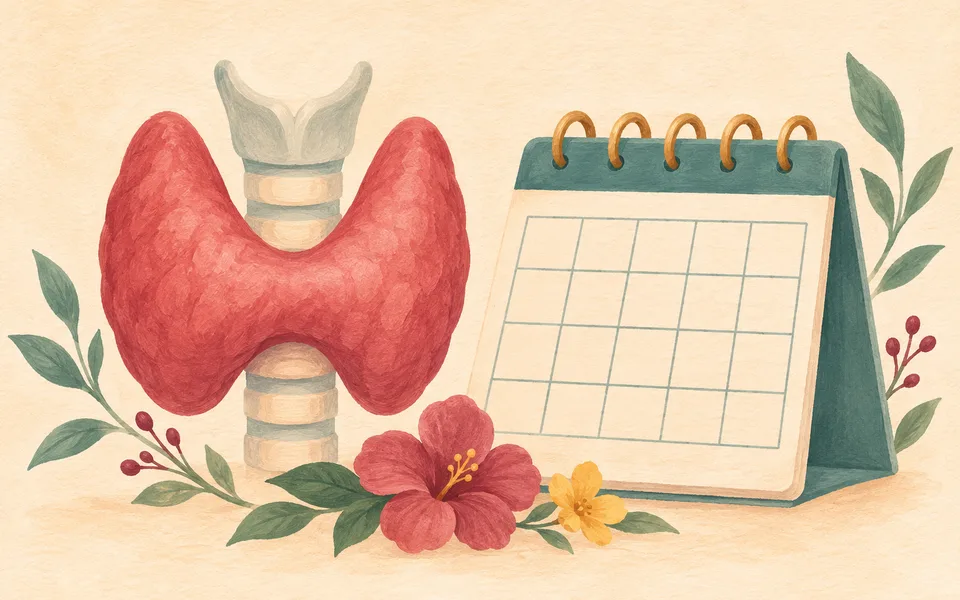
The thyroid is a small butterfly-shaped gland at the front of your neck. It makes hormones that set how fast your body works. The brain controls it using TSH: when thyroid hormone is low, TSH goes up.
Underactive thyroid (hypothyroidism)
- Tiredness, feeling cold, weight gain, constipation
- Dry skin, hair thinning, low mood
- Periods that are heavier, longer or less regular
- Trouble getting pregnant, and a higher risk of miscarriage if untreated
The usual cause is an autoimmune condition. Treatment is a daily tablet of thyroid hormone (levothyroxine).
Overactive thyroid (hyperthyroidism)
- Racing heart, shaking, anxiety, sweating, feeling hot
- Weight loss despite eating well
- Lighter or less frequent periods
- Trouble sleeping
Treatments include tablets, radioactive iodine or surgery. The choice depends on the cause, your age and pregnancy plans.
Thyroid and pregnancy
- Untreated thyroid disease can affect the pregnancy and the baby's development.
- Your body needs more thyroid hormone in early pregnancy. Women on levothyroxine often need a higher dose and extra blood tests every few weeks early on.
- Do not wait for your next appointment. Tell your doctor when you get a positive test.
- Some medicines for overactive thyroid are changed in pregnancy, so planning ahead is important.
After the baby arrives
Some women develop temporary thyroid inflammation in the first year after birth (postpartum thyroiditis). It can cause an overactive phase, then an underactive phase, with tiredness, palpitations, low mood or hair loss. These symptoms are often blamed on new motherhood, so mention them to your doctor.
Good to know
- Take levothyroxine on an empty stomach, and keep iron or calcium tablets at least 4 hours apart.
- Biotin supplements can give false thyroid results. Stop them for a few days before a blood test if your doctor agrees.
- Using iodised salt helps, but do not take extra iodine supplements unless advised.
When to see a doctor
- Symptoms listed above, especially with changes in your periods
- A lump or swelling in the neck
- Planning pregnancy or recently pregnant with thyroid disease
- A family history of thyroid problems
Summary
Thyroid problems are common and treatable. A single blood test tells you the answer, and good control protects your periods, fertility and pregnancy.
Put your thyroid and cycle history on one page
Write down when the cycle changes started, any thyroid diagnosis and the dates of recent blood tests. Bring a list of prescription medicines, supplements and any recent dose changes, if you know them.
You might ask “Could my thyroid results help explain this change, and are there other causes we should consider?” Mention if you are planning a pregnancy, are pregnant or recently gave birth so that the clinician can advise on follow-up.
References